Customer Experience
How to Map the Voice of the Customer (And Actually Use It)
4 minute read
As businesses strive to provide exceptional customer experiences, the voice of the customer has become a critical strategic input. But there's a big gap between collecting feedback and actually acting on it.
I've seen this pattern repeatedly: a company invests in NPS surveys, CSAT scores, and customer interviews - and then the data sits in a dashboard that nobody outside of CX looks at. The voice of the customer becomes a reporting exercise instead of a decision-making tool.
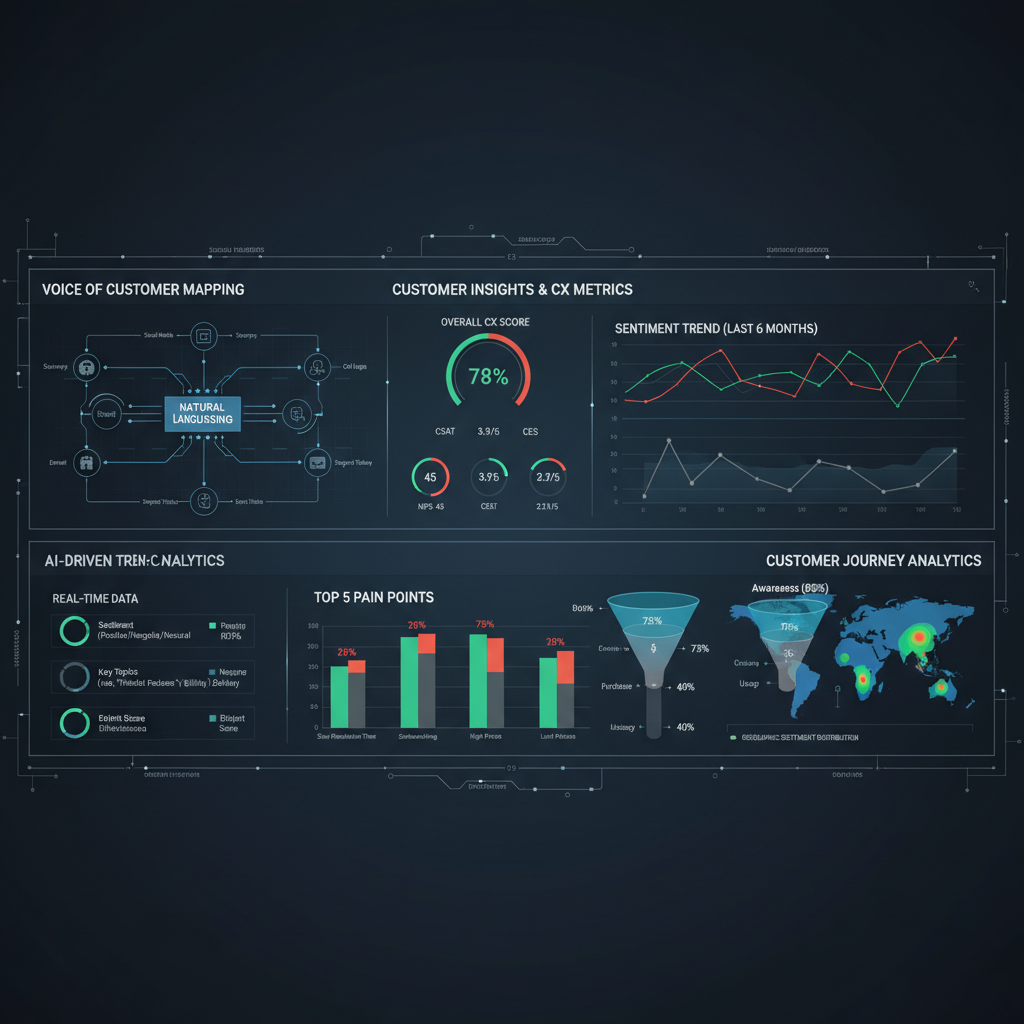
Step 1: Capture feedback across every touchpoint. VoC data lives everywhere - support tickets, NPS responses, sales call notes, social media mentions, product reviews, churn interviews. Build a system that pulls signals from all channels into one place.
Step 2: Categorize and quantify. Raw feedback is noise. Structured feedback is signal. Tag every piece of feedback by theme: product gaps, onboarding friction, pricing confusion, support quality, feature requests. Once you have categories, you can count them - and priority becomes obvious.
Step 3: Route insights to the right owners. Feedback about the product needs to reach the product team. Feedback about onboarding needs to reach CS. Feedback about pricing needs to reach leadership. Create a clear routing system so insights don't die in the CX inbox.
Step 4: Close the loop - with customers AND internally. When a customer's feedback leads to a change, tell them. 'You mentioned X, so we did Y' is one of the most powerful retention messages you can send. Internally, share wins too - let the product team see the impact of feedback they acted on.
VoC isn't a survey. It's a system. When it's built right, it becomes one of the most powerful levers you have.
Tags
voice of customerVoCcustomer feedbackCX strategyretention