Strategy
How Casper and Netflix Use AI to Know You Better Than You Know Yourself
4 minute read
Most companies recognize the importance of customer data. Fewer know how to actually use it. Casper and Netflix are two examples that stand out - not because they collect data, but because they've built their core product experience around it.
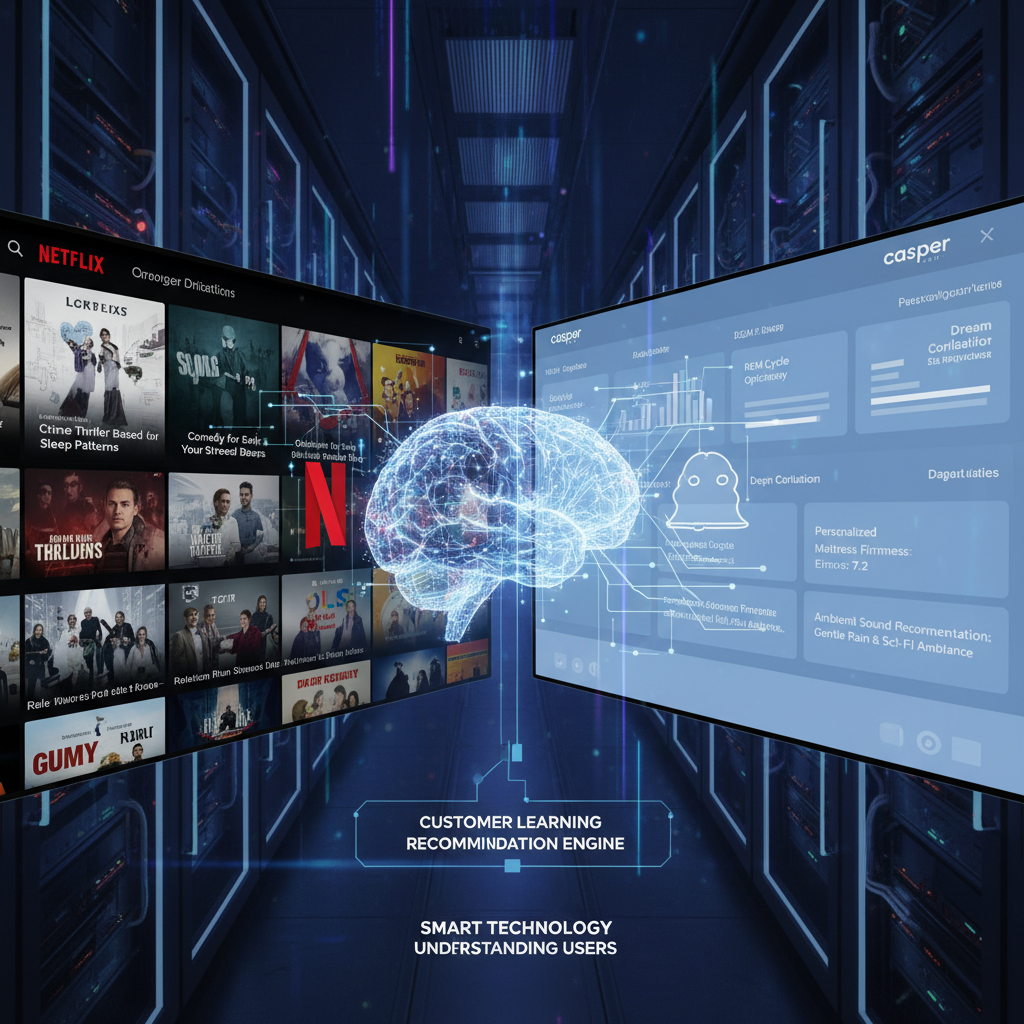
Netflix: The algorithm IS the product. Netflix's recommendation engine is responsible for over 80% of the content watched on the platform. The majority of what people watch, they didn't explicitly search for - it was surfaced by an algorithm that learned their preferences better than they could articulate them. Every time Netflix correctly predicts something you'll love, the switching cost of leaving gets higher. The algorithm creates loyalty by demonstrating it understands you.
Casper: Using data to solve problems customers don't know they have. Casper used customer data in a less obvious but equally powerful way. Rather than just tracking purchases, they analyzed usage patterns to proactively identify issues - reaching out to customers before they had a complaint. Proactive service based on data signals is one of the most underused levers in CX.
What this means beyond the tech giants: You don't need Netflix's engineering budget to apply these principles. The question is: what signals are my customers sending that I'm currently ignoring? Support ticket patterns, login frequency drops, feature adoption gaps - these are all forms of customer voice that, if acted on proactively, can prevent churn before it happens.
AI and automation accelerate this. But the mindset of using data to anticipate needs - rather than just react to them - is available to any team willing to look.
Tags
AINetflixCaspercustomer datapersonalizationCX strategy